
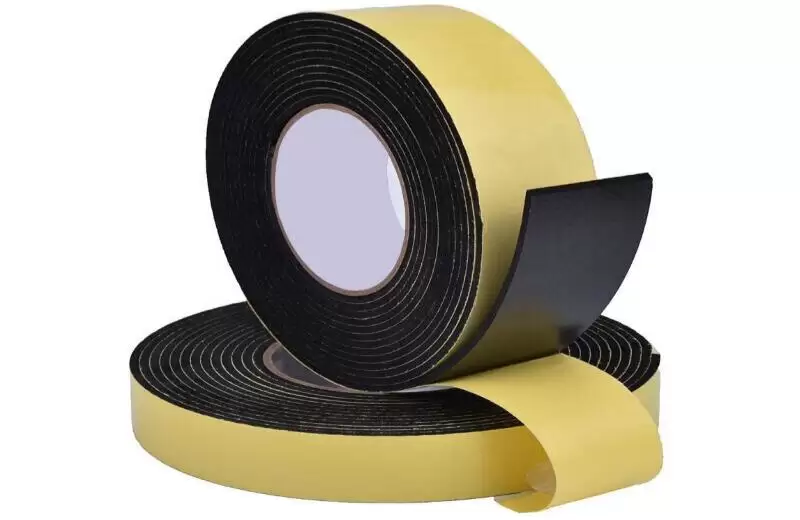
Foam tape is widely used because it is soft, flexible, and easy to apply. From automotive assembly to masking and sealing, it helps absorb vibration, fill gaps, and protect surfaces. Yet many users encounter the same frustrating issue after months of use: foam tape shrinks, curls, or deforms.
If you have ever seen a 2 sided foam tape pull away from an edge, or an acrylic foam tape lose its original thickness, you are not alone. Understanding why this happens is the first step to choosing the right product—and avoiding costly rework.
This article explains why foam tape changes shape over time, what factors accelerate failure, and how to select more stable solutions for long-term use.
Foam Tape Is Not a Rigid Material—and That Matters
Foam tape is made from polymer-based materials designed to compress and recover. Whether it is an adhesive double sided foam tape or a foam single sided tape, the structure relies on tiny air-filled cells.
These cells allow flexibility, but they also make foam sensitive to:
• Temperature changes
• Pressure and load
• Humidity and aging
Unlike solid plastics or metals, foam is always adjusting at a molecular level. Over time, these small changes add up.
Material Quality Plays a Bigger Role Than Many Expect
One major reason foam tape shrinks or deforms is inconsistent raw material quality.
Low-cost foam products often use:
• Recycled polymers
• Excess fillers
• Uneven cell structures
These shortcuts reduce manufacturing cost but weaken long-term stability. When exposed to heat or cold, the polymer chains move unevenly, causing permanent shrinkage or collapse. In extreme cases, the foam structure can lose up to half of its original thickness.
High-quality acrylic foam tape uses controlled polymer formulations and uniform cell structures. This helps the tape maintain its dimensions even under stress.
Temperature Changes Create Constant Internal Stress
Temperature is one of the most common but overlooked factors.
• Cold environments slow molecular movement, causing foam to contract
• High temperatures increase chain activity, leading to expansion and softening
Repeated heating and cooling cycles—common in automotive or outdoor applications—cause internal stress. Over time, the foam releases that stress by changing shape.
This is especially noticeable in foam masking tape automotive applications, where the tape may look fine during painting but shrink or lift days later.
Storage and Compression Can Permanently Damage Foam
Even before installation, foam tape can be damaged by poor storage.
Problems often occur when:
• Rolls are stacked under heavy weight
• Tape is stored in hot warehouses
• Long-term compression flattens the foam cells
Once the internal cell structure collapses, the foam may never fully recover. When installed later, the tape appears thinner, uneven, or prone to deformation.
Properly stored 2 sided foam tape should remain relaxed and free from constant pressure.
Manufacturing Process and Internal Stress Matter
Foam tape performance is not just about materials—it is also about process control.
During production, issues such as:
• Uneven adhesive coating
• Improper curing
• Excessive winding tension
can introduce internal stress. That stress may not be visible at first, but over time it releases, causing the tape to shrink, curl, or lift at the edges.
This is why process consistency matters just as much as raw materials.
Application Environment Can Accelerate Deformation
Even a well-made adhesive double sided foam tape can fail if used outside its intended conditions.
Common risk factors include:
• High humidity causing moisture absorption
• Constant vibration loosening foam structure
• Uneven surfaces creating localized stress points
Foam single sided tape used as a structural support—rather than a cushioning or sealing layer—often deforms faster because it is forced to carry loads it was not designed for.
How to Reduce Shrinkage and Deformation in Real Use
While foam tape will always change slightly over time, these steps greatly reduce risk:
1.Choose foam tape designed for your temperature range
2.Avoid over-compression during installation
3.Store rolls flat, cool, and unweighted
4.Match foam density to the application load
5.Allow tape to acclimate before use
For automotive or industrial use, selecting the right foam structure is far more important than choosing the lowest price.
Why OEM Control Makes a Difference
At QKD, we have spent over 15 years working directly with foam tape formulations, coating processes, and application testing.
With a 15,000㎡ production facility, full in-house coating lines, and ISO 9001 certification, we control everything from polymer selection to final slitting. Our products meet UL, IEC, CE, and RoHS standards and are supplied globally.
More importantly, we support OEM and ODM customization, allowing customers to match foam density, adhesive type, and thickness precisely to their application—whether for automotive masking, wire harness protection, or sealing and vibration damping.
Foam tape stability is not accidental. It is designed.
Final Thoughts
Foam tape shrinkage or deformation is rarely caused by a single factor. It is usually the result of material quality, temperature exposure, internal stress, and misuse working together over time.
Understanding these causes helps you choose the right product—and avoid failures that appear long after installation.
If long-term performance matters, foam tape should never be treated as a generic commodity.
FAQ
Q1: Is foam tape shrinkage a manufacturing defect?
Not always. Shrinkage is often caused by temperature changes, long-term compression, or using foam tape outside its design limits.
Q2: Does acrylic foam tape shrink less than other foam tapes?
Yes. High-quality acrylic foam tape generally offers better dimensional stability than low-density or recycled foam materials.
Q3: Can storage conditions affect foam tape performance?
Absolutely. Heat, humidity, and constant pressure during storage can permanently deform foam tape before it is even used.
Q4: How can I reduce foam tape deformation after installation?
Use the correct foam density, avoid over-compression, and match the tape to the operating temperature and application load.
