
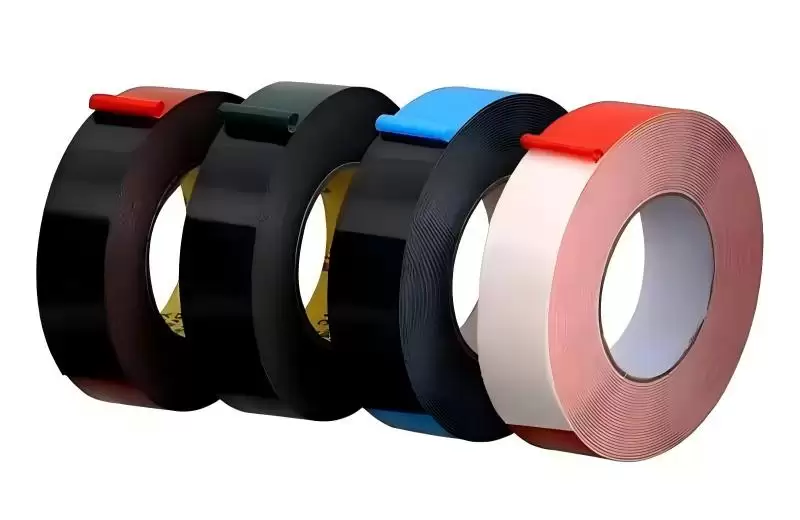
You've got a roll of acrylic foam tape or some dense foam strips ready for your project. Maybe you're installing trim, mounting a sign, or sealing a gap. But before you peel the liner, there's one step that can make or break your work: cutting the tape.
Cutting double adhesive tape foam isn't like cutting paper. Do it wrong, and you'll get jagged edges, compressed foam, or adhesive that gums up your tools. Do it right, and you get clean, precise pieces that fit perfectly and hold securely.
Here's how professionals cut different types of foam tape, and why the right technique matters.
First: Know Your Foam Tape Type
Not all foam tapes cut the same way. The material affects your approach:
• Acrylic Foam Tape: Firm yet flexible. Cuts cleanly but can compress if you use dull tools.
• High Density Foam Tape & Dense Foam Strips: More resistant to compression but requires sharper blades.
• EPDM Foam Tape: Rubber-like and resilient. Needs a very sharp blade to avoid tearing.
• EVA Foam Tape: Softer and more pliable. Easier to cut but can deform if pressed too hard.
Identifying your material is the first step to choosing the right cutting method.
The Toolbox: What Works Best for Clean Cuts
1. The Utility Knife or Sharp Blade (Best for Most Projects)
This is the go-to for precision. Use a fresh blade—dull blades tear foam and create messy edges.
• Technique: Place the tape on a cutting mat or sacrificial board. Use a metal ruler as a straightedge. Hold the knife at a consistent angle (about 45°) and pull firmly in one smooth motion. Don't saw back and forth.
• Best for: Acrylic foam tape, high density foam tape, straight cuts, and custom shapes.
2. Scissors (For Quick, Simple Cuts)
Use only sharp, precision scissors (craft or medical grade).
• Technique: Support the full length of the tape as you cut. Don't let it hang—this stretches and deforms the foam. For dense foam strips, open the scissors wide and use the base of the blades for more leverage.
• Best for: EVA foam tape, narrower widths, and curved cuts where a knife is impractical.
3. Rotary Cutter (For High Volume & Consistency)
The choice for workshops doing repetitive cuts.
• Technique: Works like a pizza cutter. Use with a straightedge and self-healing mat. Provides extremely clean, consistent edges with minimal pressure.
• Best for: Long runs of custom foam tape, production environments, and achieving factory-like edges.
4. Band Saw or Die Cutter (For Industrial Applications)
For manufacturers or large projects.
• Technique: Specialized equipment that delivers perfect, repeatable cuts. Requires proper setup and safety measures.
• Best for: Mass production of EPDM foam tape seals, double adhesive tape foam parts, and complex custom foam tape shapes.
Pro Tips to Avoid Common Mistakes
1.Mark Before You Cut: Use a fine-tip pen or a light score line on the liner—not the foam surface.
2.Mind the Liner: For double adhesive tape foam, cut through both foam and liner together when possible. This keeps the adhesive protected and the edges aligned.
3.Support the Tape: Never cut while holding the tape in mid-air. Always work on a firm, flat surface.
4.Clean Your Blade: Adhesive residue builds up. Wipe the blade with mineral spirits or alcohol between cuts to prevent gumming.
5.Practice on Scrap: Especially important for high density foam tape or expensive acrylic foam tape.
Why Precision Cutting Matters
You might wonder why all this detail matters. It comes down to performance:
• Sealing & Gasketing: Jagged edges on EPDM foam tape or dense foam strips create leak paths.
• Aesthetic Mounting: Uneven acrylic foam tape behind a sign or trim shows through over time.
• Adhesive Failure: Compressed or torn foam edges reduce surface contact, weakening the bond.
Getting It Done Right: The QKD Difference
At QKD, we understand that performance starts long before application—it begins with how you handle the material. With over 15 years of expertise in advanced tape manufacturing, we've seen how proper material preparation impacts results.
Our 15,000㎡ vertically integrated production facility allows us to engineer tapes with cutting in mind. Whether you're working with high density foam tape for structural mounting or soft EVA foam tape for cushioning, we control the formulation and coating process to ensure consistent density and clean machinability.
QKD is ISO 9001 certified, and our foam tapes meet UL, IEC, CE, and RoHS standards for global applications. Through our OEM/ODM services, we don't just supply rolls—we can provide custom foam tape pre-cut to your exact dimensions, complete with liner slits or kiss-cut shapes, saving you time and improving consistency in your assembly process.
Final Cut: It's About More Than Just Sizing
Cutting double-sided foam tape well isn't just a step—it's a skill that protects your material investment and ensures your project succeeds. With the right tools and techniques, you turn a simple roll into precise, reliable components.
Need foam tape that cuts cleanly and performs consistently? Talk to QKD about standard products or custom-cut solutions tailored to your production line.
FAQ
Q1: Can I use regular scissors to cut acrylic foam tape?
Yes, but ensure they are sharp and sturdy. Dull scissors will compress the foam and create uneven edges. For best results with acrylic foam tape, a sharp utility knife with a straightedge is recommended.
Q2: What's the best way to cut dense foam strips without deforming them?
For dense foam strips or high density foam tape, use a very sharp blade (utility knife or rotary cutter) with firm, single-stroke cuts. Support the strip fully on a hard surface to prevent bending or compression.
Q3: Is it possible to get custom foam tape pre-cut to my specifications?
Yes. As an experienced custom foam tape provider, QKD offers OEM/ODM services, including kiss-cutting, slitting, and die-cutting to deliver tape in ready-to-apply shapes and sizes.
Q4: How do I prevent adhesive from sticking to the blade when cutting double adhesive tape foam?
Clean your blade regularly with isopropyl alcohol or a mild solvent. Cutting through both the foam and the liner together can also reduce adhesive contact with the blade.
Q5: Can EPDM foam tape and EVA foam tape be cut with the same tools?
While both can be cut with sharp blades, EPDM foam tape is more rubber-like and requires a sharper blade to avoid tearing. EVA foam tape is softer and easier to cut but may require gentle handling to avoid deformation.
Q6: Why does the edge quality of foam tape matter for sealing applications?
Jagged or compressed edges on tapes like EPDM foam tape or dense foam strips can create gaps, compromising the seal and allowing moisture or air leakage. A clean cut ensures full contact and consistent performance.
Q7: Does QKD provide guidance on cutting techniques for specific tapes?
Yes. QKD offers technical support for all our products, including recommended cutting methods for acrylic foam tape, high density foam tape, and other specialty tapes to help you achieve optimal results.
Q8: What should I do if I need to cut complex shapes from foam tape?
For complex shapes, consider ordering pre-cut custom foam tape from QKD. For in-house cutting, use a sharp utility knife with a printed template or a programmable die-cutting machine for consistency.
Q9: How can I ensure consistent thickness when cutting thick foam tape?
Use a sharp blade and avoid pressing down excessively. For very thick high density foam tape, a band saw or oscillating knife may provide more control and uniformity.
Q10: Is there a minimum order quantity for custom-cut foam tape from QKD?
QKD works flexibly with clients of all scales. Contact us directly to discuss your custom foam tape needs, whether for prototyping or large-scale production.
Relevant Posts
What Is Acrylic Foam Tape Used For? A Practical Guide to Choosing the Right Performance
Acrylic Foam Tape Solutions for Automotive Excellence | QKD
How to Remove Foam Tape from Car - Easy Step-by-Step Guide | No Damage Tips
How to Reduce Vehicle Noise and Vibration with Foam Tape | QKD Tape
